 Save
Save The first time I made minestrone, I dumped every vegetable I could find into the pot, convinced that more equaled better. It wasn't until my Italian neighbor pointed out that minestrone isn't about throwing everything in—it's about letting each vegetable have its moment to shine before it joins the chorus. Now I treat the process like building a friendship, taking time with each ingredient before they all come together in the bowl.
Last winter, my friend Maria showed up at my door with a bag of mismatched vegetables from her farmers market haul and insisted we make minestrone together. We stood over the pot for hours, tasting and adjusting, drinking wine while the snow fell outside. Now every time I smell rosemary and simmering tomatoes, I'm back in that kitchen, learning that some soups are really just an excuse to gather the people you love.
Ingredients
- 2 tablespoons olive oil: This creates the foundation that carries all the vegetable flavors forward
- 1 medium onion, finely chopped: Taking time to chop it small ensures it melts into the soup rather than staying in distinct chunks
- 2 cloves garlic, minced: Add this after the onion has started softening so it doesn't burn and turn bitter
- 2 medium carrots, diced: These provide natural sweetness that balances the acidity from the tomatoes
- 2 celery stalks, diced: The aromatic base that gives depth and that classic soup flavor everyone recognizes
- 1 medium zucchini, diced: Keep the pieces relatively large since zucchini can turn to mush if overcooked
- 1 medium potato, peeled and diced: This naturally thickens the broth as it breaks down during simmering
- 1 cup green beans, cut into 1 inch pieces: Fresh ones hold their texture better than frozen, which can become waterlogged
- 1 (14 oz) can diced tomatoes with juices: The acidity here brightens all the earthy vegetable flavors
- 4 cups vegetable broth: Homemade broth adds layers of flavor, but a good quality store bought version works perfectly
- 2 cups water: This prevents the soup from becoming too salty or concentrated as it reduces
- 1 (15 oz) can cannellini beans, drained and rinsed: These provide creamy texture and protein without overwhelming the vegetables
- 3/4 cup small pasta: Ditalini or elbows work best because they catch in your spoon with every bite
- 1 teaspoon dried oregano: This brings that essential Italian herb backbone to the soup
- 1 teaspoon dried basil: Use this during cooking while reserving fresh basil for finishing
- 1 bay leaf: Remove it before serving since it doesn't soften and can be unpleasant to bite into
- Salt and freshly ground black pepper: Taste at the end since the broth and beans may already provide enough saltiness
- 1/4 cup chopped fresh parsley: This adds a bright fresh finish that cuts through the rich tomato base
- 2 tablespoons chopped fresh basil: Stir this in at the very last minute to preserve its delicate flavor
- Freshly grated Parmesan cheese: The salty umami finish that transforms a good soup into something memorable
Tired of Takeout? 🥡
Get 10 meals you can make faster than delivery arrives. Seriously.
One email. No spam. Unsubscribe anytime.
Instructions
- Build your aromatic foundation:
- Heat the olive oil in your large soup pot over medium heat until it shimmers slightly. Add the chopped onion and cook for about 2 minutes, until it starts to turn translucent, then add the garlic and cook for another minute until you can smell its fragrance throughout your kitchen.
- Soften the harder vegetables:
- Add the carrots, celery, zucchini, potato, and green beans all at once. Stir everything together and let it cook for 5 to 6 minutes, just until the vegetables start to soften around the edges and the raw smell disappears.
- Create the soup base:
- Pour in the diced tomatoes with all their juices, followed by the vegetable broth and water. Stir in the dried oregano, dried basil, bay leaf, and add salt and pepper. Bring everything to a gentle boil, watching as the tomato swirls into the broth.
- Let the flavors develop:
- Reduce the heat to maintain a steady simmer, cover the pot, and cook for 15 minutes. The vegetables should be tender but still holding their shape, and your kitchen should smell incredibly inviting.
- Add the pasta and beans:
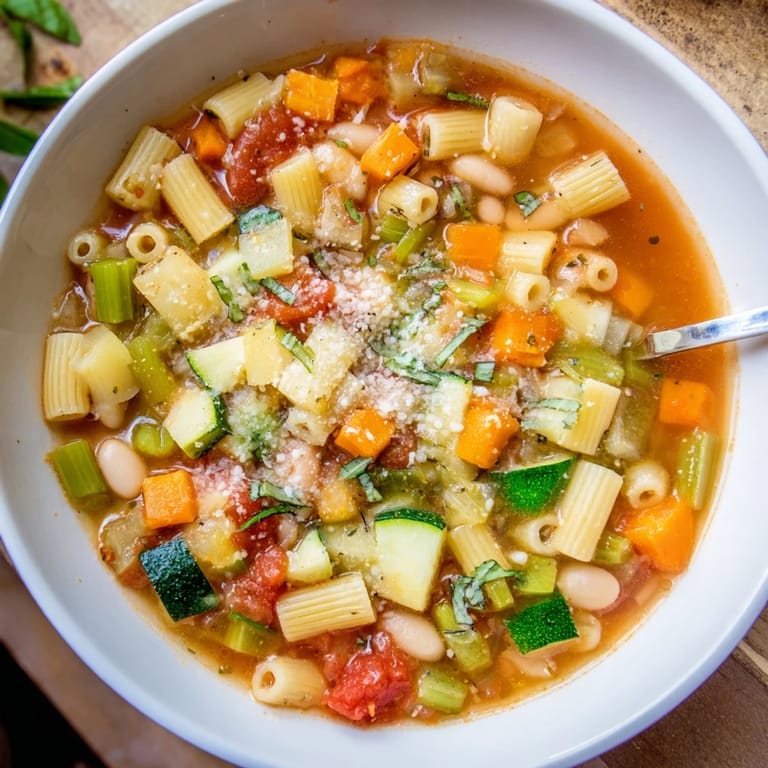
- Stir in the drained cannellini beans and the pasta, then continue simmering uncovered for 10 to 12 minutes. Test the pasta occasionally, and when its tender and the vegetables are completely cooked through, you're almost done.
- Finish with fresh herbs:
- Fish out and discard the bay leaf, then stir in the fresh parsley and basil. Taste the soup and add more salt or pepper if needed, keeping in mind that the Parmesan garnish will add saltiness.
- Serve immediately:
- Ladle the hot soup into bowls and pass the Parmesan cheese at the table so everyone can grate their own. Serve with crusty bread for soaking up every drop.
 Save
Save My daughter now asks for this soup every time the weather turns even slightly chilly, and I've realized that the ritual of making it has become just as important as eating it. There's something profoundly satisfying about transforming a pile of humble vegetables into something that makes people feel genuinely cared for.
Making It Your Own
Minestrone is arguably the most forgiving soup in existence because it was designed to use up whatever vegetables need to be eaten. In spring I swap in fresh peas and asparagus, while fall versions welcome butternut squash and hearty greens. The only constant is the method of building flavors in layers, not the specific vegetables themselves.
The Pasta Question
Traditional Italian cooks often cook pasta separately and add it to individual bowls rather than the soup pot, which keeps each element at its perfect texture. If you're serving this soup to guests or planning leftovers, this extra step transforms the experience completely. The pasta stays perfectly al dente instead of swelling into the broth.
Serving Suggestions
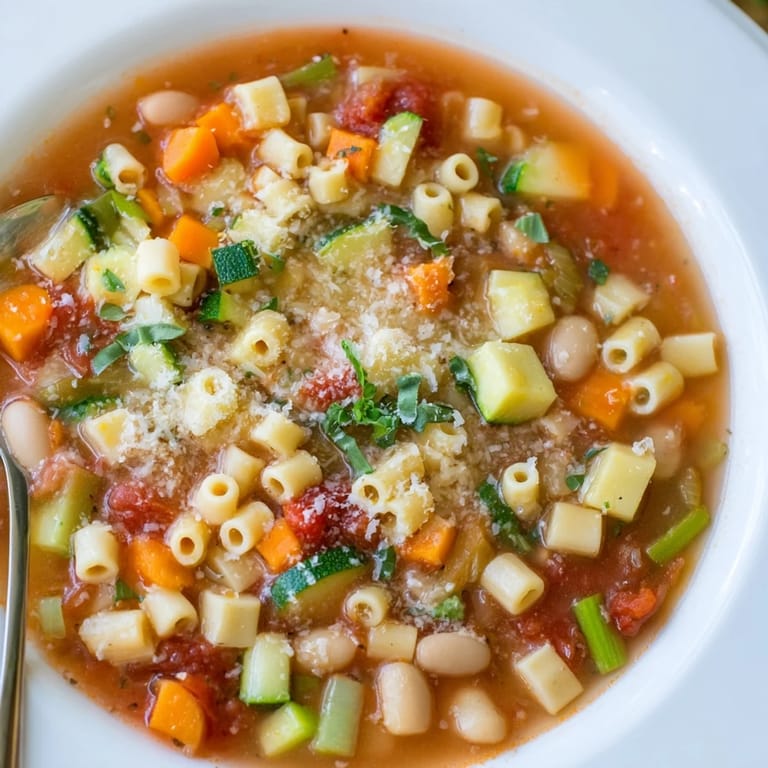
A drizzle of really good olive oil just before serving adds a luxurious finish that makes the soup feel restaurant quality. Toast some crusty bread rubbed with raw garlic while the soup simmers, or consider a simple arugula salad dressed with lemon vinaigrette to cut through the richness.
- Grate extra Parmesan over each bowl at the table so it melts into the hot soup
- A splash of red wine vinegar added just before serving brightens all the flavors
- Keep extra vegetable broth handy when reheating leftovers since the pasta will absorb liquid
 Save
Save This is the soup that keeps on giving, a bowl of comfort that somehow manages to be even better the second day. May your pot be full and your bread be crusty.
Recipe FAQ Section
- → Can I make minestrone soup ahead of time?
Absolutely. In fact, the flavors deepen and improve overnight. Store in the refrigerator for up to 4 days, adding a splash of water or broth when reheating as the pasta will continue absorbing liquid.
- → What pasta works best in minestrone?
Small shapes like ditalini, elbow macaroni, shells, or small tubetti capture the broth beautifully while maintaining texture. Avoid large pasta that overpowers the vegetable balance.
- → Can I freeze minestrone soup?
Yes, though the pasta texture will soften considerably. For best results, freeze without pasta, adding freshly cooked pasta when reheating. Keeps frozen for 3 months in airtight containers.
- → How do I make minestrone vegan?
Simply omit the Parmesan garnish or use a plant-based alternative. The soup itself relies entirely on vegetable broth and plant-based ingredients, making it naturally dairy-free.
- → What vegetables can I substitute?
This soup adapts beautifully to any seasonal vegetables. Try adding spinach or kale in winter, fresh peas in spring, or bell peppers and eggplant during summer harvest months.
- → Why is my soup too thick?
Pasta absorbs liquid significantly as it cooks and sits. Simply add more vegetable broth or water until reaching desired consistency, adjusting seasoning accordingly.