 Save
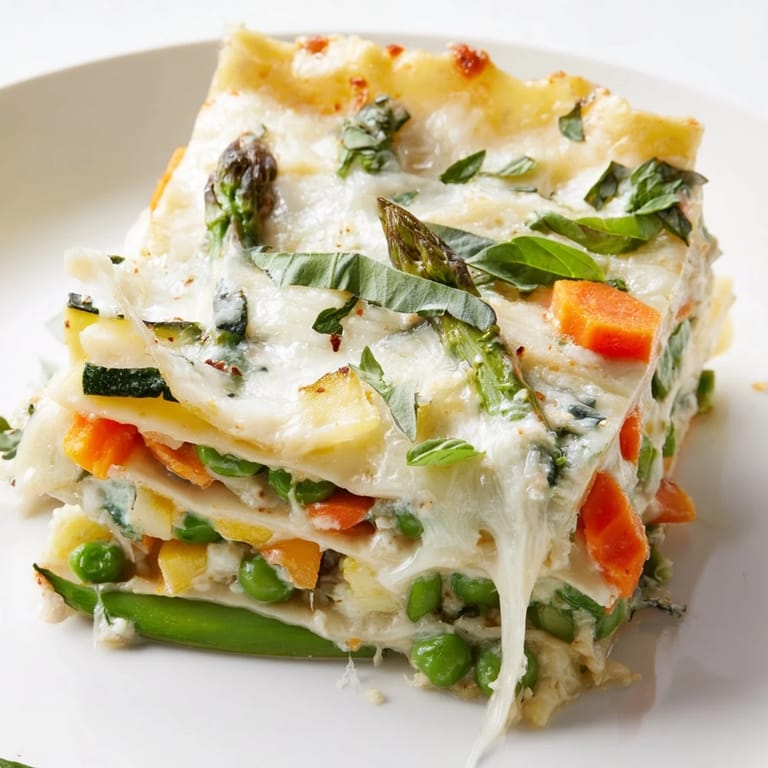
Save I used to think lasagna was strictly a winter food until a friend showed up with armfuls of farmers market vegetables one April afternoon. We stood in my kitchen, debating what to do with all that green, and she suggested we layer it into a lasagna with Alfredo instead of red sauce. It sounded odd at first, but the moment we pulled it from the oven, bubbling and golden, I understood. This spring veggie version has since become my go-to whenever I want something comforting but not heavy, and it always reminds me of that spontaneous cooking session.
The first time I made this for my family, my niece wrinkled her nose at the sight of so much green. But after one bite, she went quiet and reached for seconds. My sister laughed and said it was the first time vegetables had ever won in her house. Now, every spring when the markets fill up with fresh produce, I get a text asking if I'm making that lasagna again. It's become our unofficial way of celebrating the season.
Ingredients
- Asparagus: Trim the woody ends and cut into bite-sized pieces so they cook evenly and nestle into the layers without poking through.
- Sugar snap peas: Their natural sweetness and crunch add a playful texture that holds up even after baking.
- Baby spinach: A handful wilts down to almost nothing, but it adds color and a subtle earthiness that balances the richness of the cheese.
- Zucchini: Dice it small so it releases moisture gently during baking without making the lasagna soggy.
- Carrots: Julienned or shredded, they bring a slight sweetness and a pop of orange that makes each slice look vibrant.
- Frozen peas: Thawed and stirred in at the end, they stay tender and bright without turning mushy.
- Part-skim ricotta cheese: Creamy but not too heavy, it spreads easily and keeps the layers light.
- Shredded mozzarella cheese: Melts into gooey pockets throughout the lasagna and creates that irresistible golden top.
- Grated Parmesan cheese: A little goes a long way for nutty, salty depth in both the ricotta and the final topping.
- Light Alfredo sauce: Store-bought works perfectly here, but homemade gives you control over the garlic and creaminess.
- No-boil lasagna noodles: They soften in the oven as they absorb the sauce, saving you a pot of boiling water and extra time.
- Garlic: Minced and sautéed just until fragrant, it infuses the vegetables with warmth without overpowering them.
- Fresh basil: Chopped and stirred into the veggies, it adds a burst of herbal brightness that makes the whole dish taste alive.
- Olive oil: Just enough to sauté the garlic and vegetables without adding heaviness.
- Salt and black pepper: Season the vegetables well so every layer has flavor on its own.
- Crushed red pepper flakes: Optional, but a pinch adds a gentle warmth that plays nicely with the creamy sauce.
Tired of Takeout? 🥡
Get 10 meals you can make faster than delivery arrives. Seriously.
One email. No spam. Unsubscribe anytime.
Instructions
- Get the oven ready:
- Preheat to 375°F and lightly grease your 9x13-inch baking dish so nothing sticks. This also helps the bottom layer of noodles soften evenly.
- Sauté the vegetables:
- Heat olive oil in a large skillet over medium heat, add garlic, and cook for just 30 seconds until it smells incredible. Toss in asparagus, snap peas, zucchini, and carrots, cooking for 4 to 5 minutes until they soften slightly but still have bite, then stir in spinach and peas for another minute before seasoning with salt, pepper, red pepper flakes, and fresh basil.
- Mix the ricotta:
- In a small bowl, stir together ricotta and half the Parmesan until smooth and spreadable. This helps the cheese layer hold together when you slice into the lasagna later.
- Start layering:
- Spread half a cup of Alfredo sauce on the bottom of your dish, then lay down 3 no-boil noodles. Top with a third of the ricotta mixture, a third of the vegetables, a third cup of mozzarella, and two-thirds cup of Alfredo, then repeat this sequence two more times.
- Finish the top:
- After your final layer of noodles, pour the remaining Alfredo sauce over them, then sprinkle the rest of the mozzarella and Parmesan on top. Cover tightly with foil so the noodles steam and soften.
- Bake covered, then uncovered:
- Bake for 30 minutes with the foil on, then remove it and bake for another 15 minutes until the top is golden and bubbling at the edges. Let it rest for 10 minutes before slicing so the layers set and don't slide apart.
- Garnish and serve:
- Scatter a few fresh basil leaves over the top for color and aroma. Slice into six generous portions and watch everyone dig in.
 Save
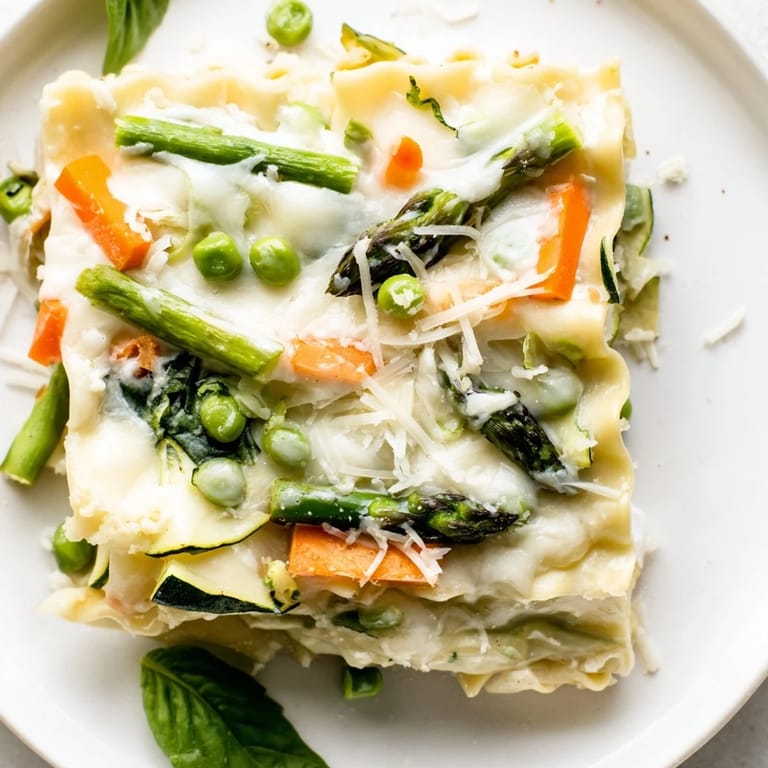
Save One evening, I brought this to a potluck where everyone else had made red-sauce Italian dishes. I worried it would feel out of place, but by the end of the night, my dish was empty and three people had asked for the recipe. One friend said it reminded her of eating lunch in her grandmother's garden, surrounded by herbs and sunshine. That's when I realized this lasagna wasn't just food, it was a little edible piece of spring that people wanted to take home with them.
Choosing Your Vegetables
I have swapped in leeks, artichoke hearts, and even thinly sliced fennel depending on what looked good at the market. The key is balancing textures, something crunchy, something tender, something leafy, so each forkful feels varied. If you use heartier vegetables like broccoli or cauliflower, blanch them first so they cook through in the oven. I learned this after biting into a half-raw floret once and vowing never again. A squeeze of lemon juice over the cooked vegetables before layering brightens everything and cuts through the richness of the Alfredo.
Sauce and Cheese Balance
Store-bought light Alfredo works great, but if you make your own, go easy on the cream and lean into garlic and Parmesan for flavor. I once used full-fat Alfredo and the lasagna was so rich we could barely finish a slice. The part-skim ricotta keeps things creamy without feeling heavy, and mixing in Parmesan adds structure so the cheese doesn't slide around. If you love extra cheesiness, add a handful of shredded Gruyère or fontina to the mozzarella for a nutty, melty surprise.
Serving and Pairing Ideas
This pairs beautifully with a crisp white wine like Pinot Grigio or a light, citrusy Sauvignon Blanc. I like to serve it with a simple arugula salad dressed in lemon and olive oil to keep the meal feeling fresh. Leftovers reheat perfectly in the microwave or oven, and sometimes I even eat a cold slice straight from the fridge for breakfast, which sounds strange but tastes amazing.
- Add a side of garlic bread if you want something to soak up extra sauce.
- For a non-vegetarian version, layer in cooked shredded chicken or crumbled Italian sausage.
- Freeze individual portions wrapped tightly in foil for an easy meal later, they reheat from frozen in about 40 minutes at 350°F.
 Save
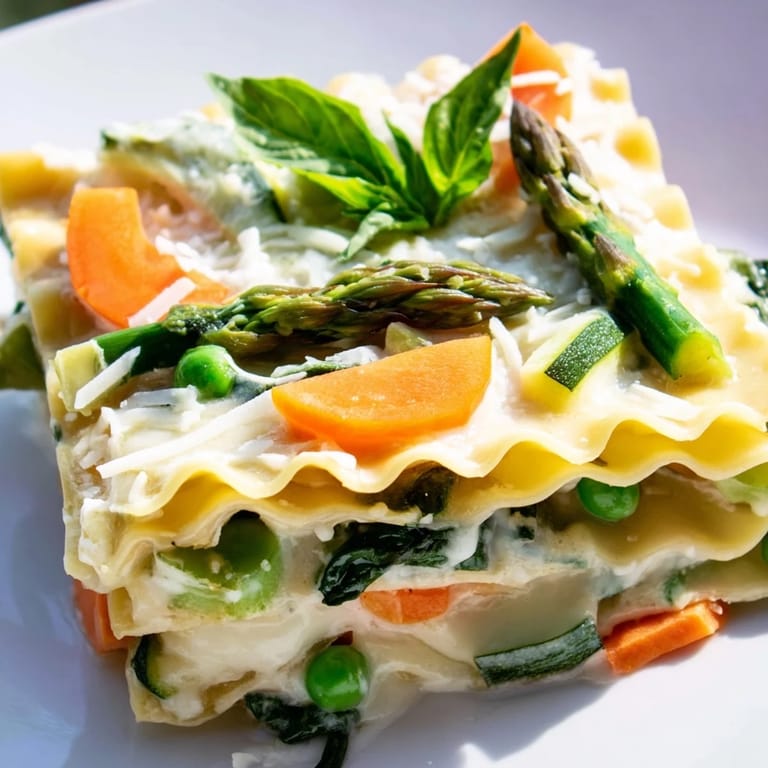
Save This lasagna has a way of making springtime feel like it belongs on your dinner table, not just in the garden. Whether you are feeding a crowd or meal prepping for the week, it delivers comfort without the guilt and makes vegetables feel like the star they deserve to be.
Recipe FAQ Section
- → Can I use regular lasagna noodles instead of no-boil?
Yes, you can substitute regular noodles. Boil them according to package directions until al dente, then drain and pat dry before layering. This will add about 10-15 minutes to your total preparation time.
- → What other spring vegetables work well in this dish?
Leeks, artichoke hearts, fresh peas, and tender broccoli are excellent substitutes. You can also add fresh mushrooms or green beans. Keep the total vegetable volume around 5-6 cups to maintain proper layering proportions.
- → How do I make homemade Alfredo sauce?
Melt 4 tablespoons butter over medium heat, whisk in 3 tablespoons flour, then gradually add 2 cups heavy cream while stirring constantly. Add 1/2 cup Parmesan cheese, salt, and white pepper to taste. Simmer until thickened, about 5-7 minutes. This yields approximately 3 cups.
- → Can I prepare this ahead of time?
Absolutely. Assemble the lasagna completely, cover with foil, and refrigerate up to 24 hours before baking. Add 10-15 minutes to the baking time if baking from cold. You can also freeze it for up to 3 months; thaw overnight in the refrigerator before baking.
- → How can I make this lighter?
Use low-fat ricotta and part-skim mozzarella, which are already recommended. Substitute light Alfredo sauce or make your own with half-and-half instead of heavy cream. Increasing vegetable portions relative to cheese also reduces overall richness while boosting nutrition.
- → What wine pairs best with this dish?
Crisp white wines work wonderfully. Pinot Grigio is ideal, offering refreshing acidity that complements the creamy sauce and spring vegetables. Other excellent choices include Sauvignon Blanc, Vermentino, or Italian Pinot Bianco.